




The impact
Create one shared project context
Documents, workflows and Applications work from the same project record rather than reconstructing context in separate systems.
Reuse information across the operating model
Evidence captured once can support operational, commercial, compliance and finance workflows without creating another isolated tool.
Make permissions part of the architecture
Project and functional boundaries control what each user can see while allowing authorised work to share the right context.
Expand without adding more caves
New Applications and modules can operate on the same underlying project and document model instead of becoming separate point solutions.
The problem
Contractors often run projects through an established BMS alongside folders, spreadsheets and specialist tools. The same project information is re-entered repeatedly, related evidence becomes fragmented and different teams can end up working from different versions of the truth.
What the platform does
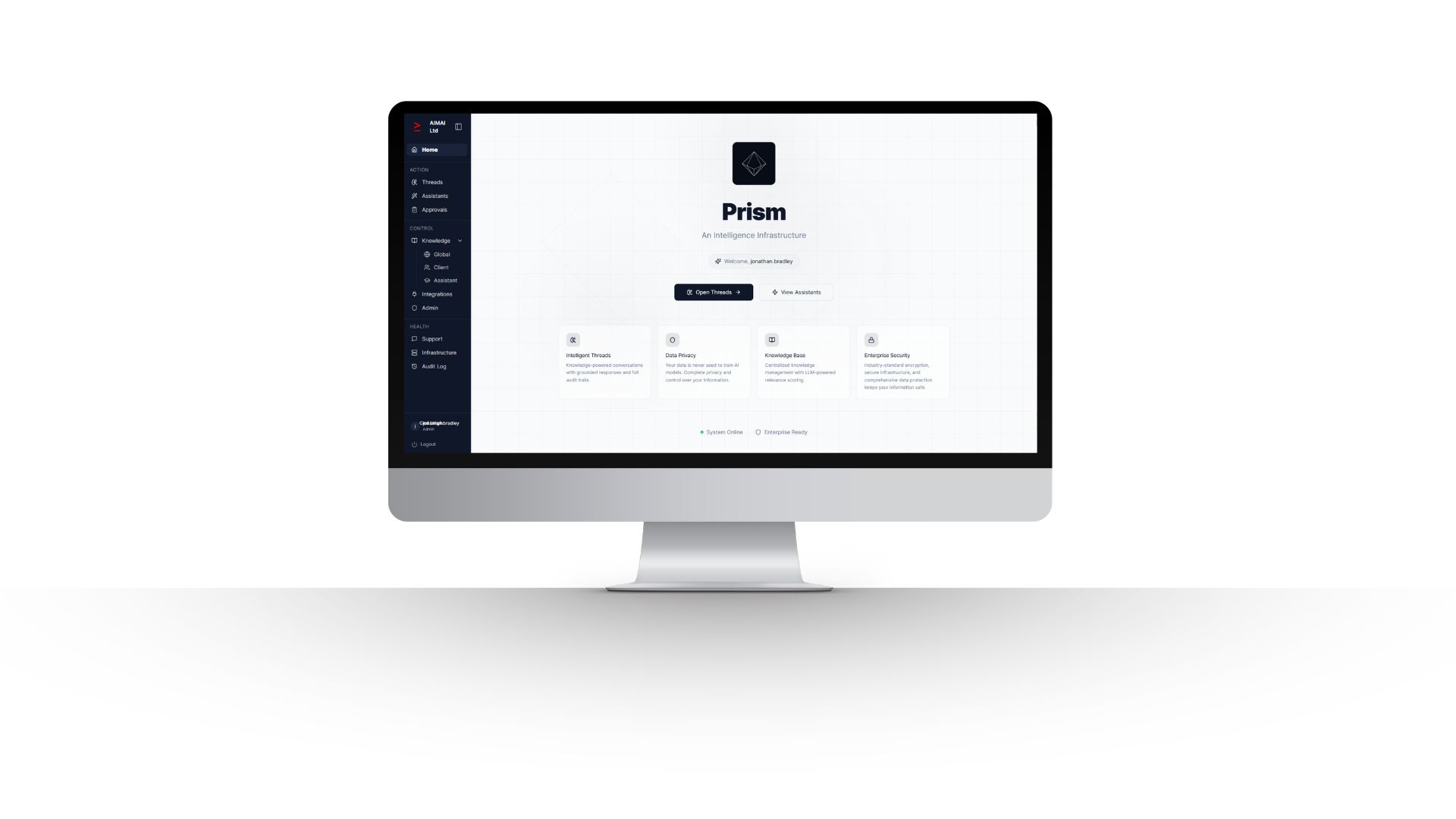
AIMAI designed the platform around two contexts: the business and the selected project. Global and project dashboards, documents, drawings, RAMS, programmes, site diaries, tenders, procurement, commercial workflows, finance and management intelligence use the same underlying project context, document model and permissions.
How it works
- Project and client master data establishes the shared context
- One authoritative project record and document record are maintained
- Operational, commercial and finance modules use the selected project context
- Documents and revisions remain linked to related records
- Permissions enforce project and functional data boundaries
- Global and project dashboards surface priorities, approvals and exceptions
What it uses
- Project and client master data
- Existing BMS and document structures
- Commercial, finance and operational workflows
- Roles, permissions and system integrations
What it produces
- Global and project dashboards
- Single project and document records
- Context-aware Applications and approvals
- Cross-project priorities, audit and management intelligence
Where people stay in control
Project context and permissions act as hard data boundaries. Commercial, safety and finance decisions remain visible, attributable and auditable, with accountable people retaining approval authority.
The result
The operating model moves towards one project-centred environment where documents, tenders, operational work, commercial processes and finance share context. Information can be reused across workflows, permissions remain explicit and new Applications can be added without creating another layer of disconnected tools.
Could something similar work in your business?
It is likely to be relevant if:
- Projects are managed across a BMS, shared folders, spreadsheets and specialist systems.
- The same project information is repeatedly entered or reconciled across teams.
- Documents, tenders, commercial work and finance all depend on the same project context.
- Permissions and audit need to follow project and functional boundaries.
- You want several Applications to share infrastructure rather than create more disconnected tools.
Have a workflow like this?
Tell us how project information, documents and commercial workflows are connected in your business today. If the challenge involves fragmented systems and repeated project context, we can show you how a Custom Operating Platform could be designed around your operating model.